

Ledgers Objects
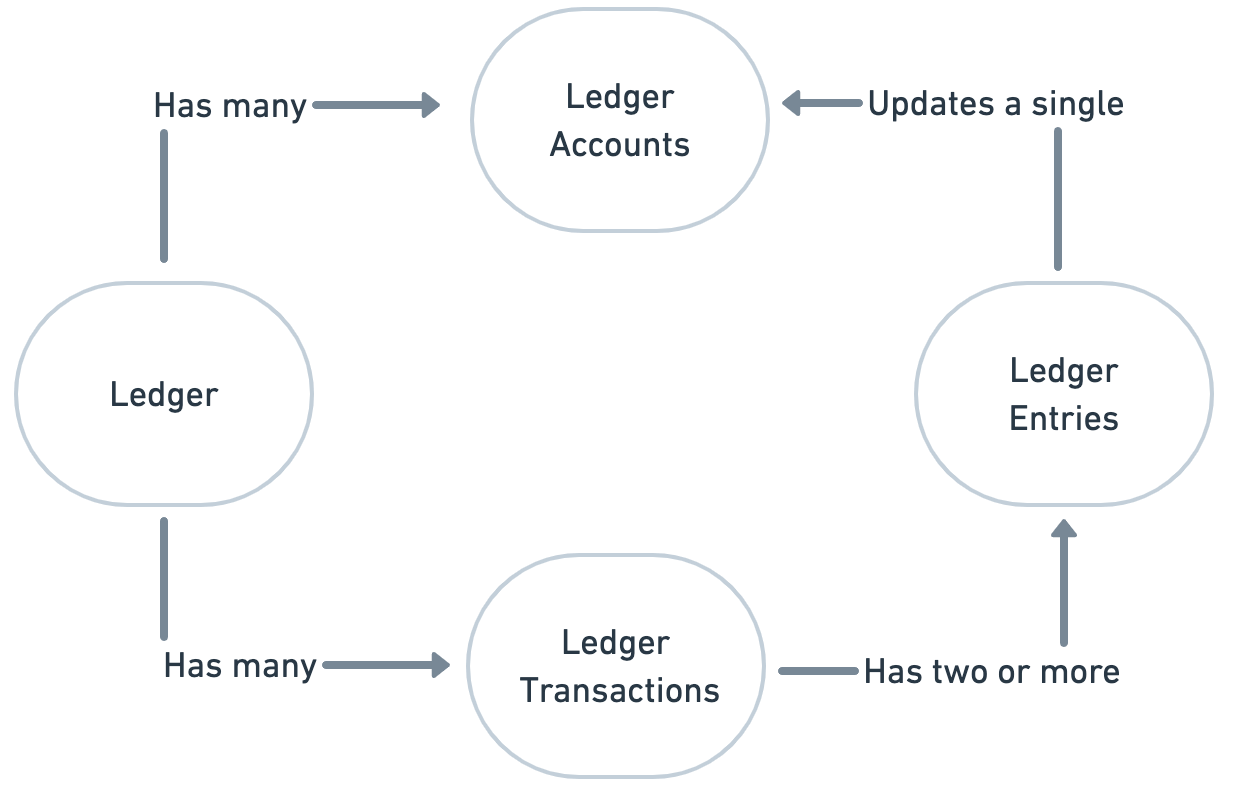
Ledgers has a simple data structure built around four core objects.
The ledger object represents your entire product ledger. You may set up a single Ledger to track all money movement across your products, or you may want to maintain different Ledgers for different discrete use cases such as business lines, individual products, or geographies.
Nested within your larger ledger object are ledger accounts. These are the balances your platform will track.
Also nested within your ledger object are ledger transaction objects. These represent financial events that happen on your platform. Each ledger transaction object is composed of at least two ledger entry objects. The Ledger Transaction obeys accounting rules; its credit and debit entries must sum to the same amount. Each ledger entry will update a single ledger account. Note that ledger transactions can write to only a single ledger, requiring multiple transactions to write across multiple ledgers.
Ledgers supports any currency as well as values that behave like currency (rewards, points, etc.).
Ledgers also features account category objects, which are aggregations of Ledger Accounts or other Account Categories. Read more about Ledger Account Categories here.
Updated 9 months ago